UDS Research Fund Opens Applications For 2026 Research Grants
The University for Development Studies (UDS), through its Institute for Interdisciplinary Research (IIR), has announced the opening of applications for the first call under the 2026 UDS Research Fund (UDS-RF), providing an opportunity for faculty, staff, students, and interdisciplinary research teams to secure funding for innovative and impactful research projects.
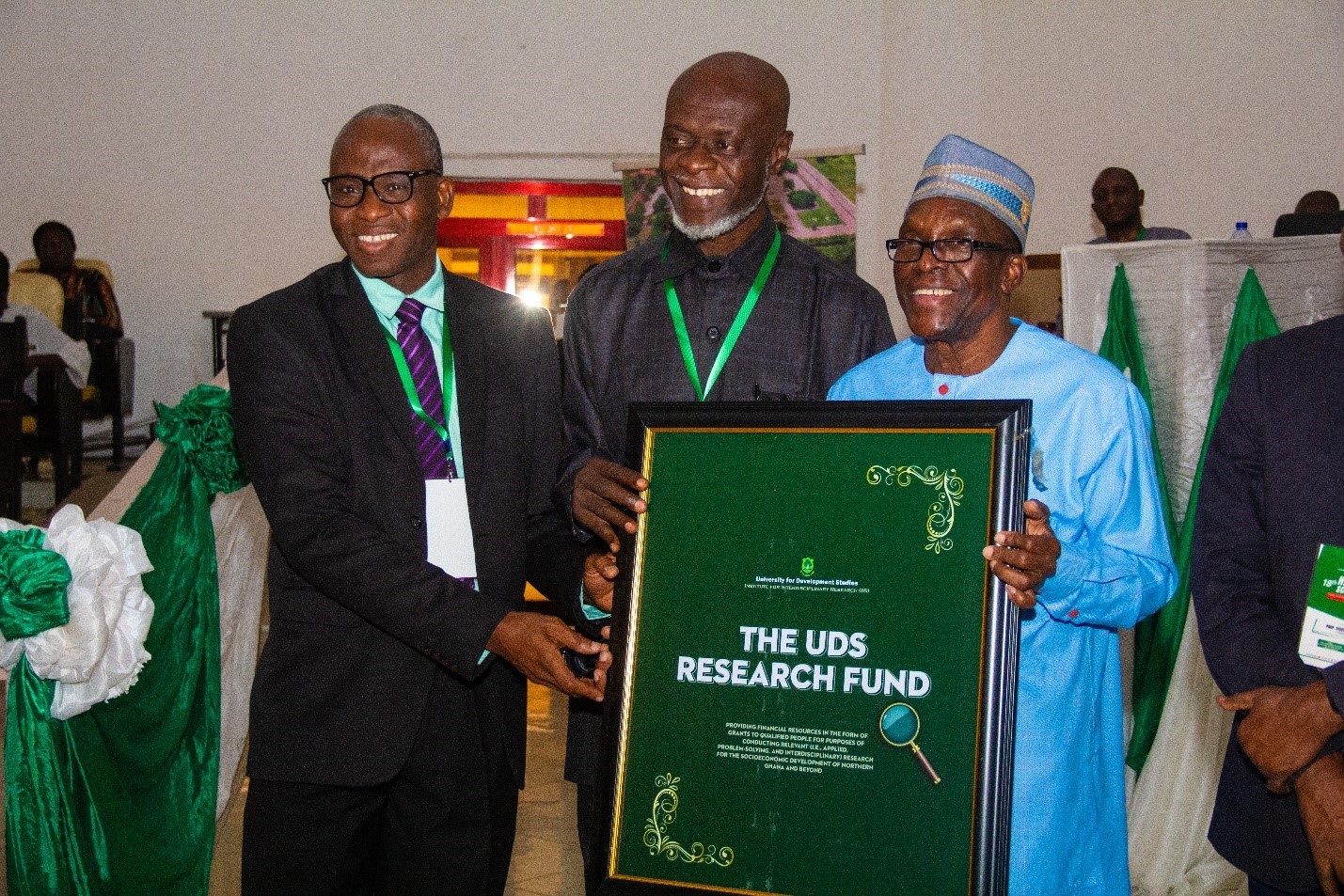
Established by the Vice-Chancellor and Management of the University, the UDS Research Fund is a strategic initiative designed to strengthen the University's culture of research excellence and promote the use of research as a tool for societal transformation. The Fund seeks to support research that addresses critical development challenges while fostering collaboration between academia, industry, policymakers, and communities.
The UDS Research Fund forms part of the University's broader vision of advancing academic excellence and inclusive development through research that generates practical solutions to real-world problems. Through this initiative, the University aims to encourage the production of knowledge that contributes to the socioeconomic and politico-cultural transformation of northern Ghana and beyond.
Objectives of the UDS Research Fund
The Fund seeks to support research that will:
- Build research capacity among faculty, staff, and students and provide a platform for showcasing UDS research globally.
- Strengthen university-industry partnerships to facilitate the translation of research findings into practical solutions for development.
- Generate evidence-based research findings that can support policymakers and policy analysts in decision-making processes.
- Promote strategic research that advances the mission of the University while helping to retain high-quality researchers in Ghana.
- Support career advancement among faculty and staff through research and capacity-building initiatives relevant to the mandate of UDS.
Priority Research Areas
Applications are invited under three broad thematic areas:
A. Social Sciences and Humanities
Researchers may submit proposals focusing on areas such as:
- Social inclusion for economic transformation.
- Inequality, inclusive growth, and sustainable development.
- Gender and inclusive growth for socioeconomic transformation.
- Social media and voting patterns among young people in Ghana.
- Digital business transformation, innovation, and entrepreneurship.
- Peacebuilding, conflict management, and violent extremism.
- Social protection and productive inclusion.
- Modern slavery, decent work, and civic responsibility.
- Innovative and inclusive finance for development.
- Artificial intelligence and its role in economic development.
B. Basic and Applied Sciences
Priority areas include:
- Production of nutrient-rich and safe foods using local recipes.
- Application of Information and Communication Technology (ICT) to address demographic and spatial development challenges.
- Sustainable farming systems for improved food and nutrition security.
- Smart agriculture for climate change adaptation and mitigation.
- ICT for Development (ICT4D).
- Agrifood systems transformation for local economic development.
C. Medical and Health Sciences
Research proposals may focus on:
- Maternal health and women's empowerment.
- The growing burden of non-communicable diseases across urban and rural communities.
- Comparative studies on One Health practices across space and time.
- Socioeconomic and demographic determinants of healthcare delivery.
Who Can Apply?
Applications are open to individual researchers as well as research teams. Faculty members, staff, and students of UDS are encouraged to apply.
For team applications:
- Teams should comprise between two and five researchers.
- Teams are encouraged to ensure gender balance, interfaculty or interschool collaboration, and generational diversity.
- Collaborators may come from institutions outside UDS; however, the lead researcher must be a member of the UDS community.
- No individual may participate in more than one proposal.
The University particularly encourages multidisciplinary and collaborative research efforts that address complex development challenges.
Selection Criteria
To qualify for consideration:
- Individual applicants must be staff and/or students of UDS.
- For group applications, at least one member must be a UDS staff member or student.
- The lead researcher must be affiliated with UDS.
- Successful applicants must commit to publishing their research findings in reputable indexed journals, including Scopus, Web of Science, Web of Knowledge, or other credible indexed publications.
- Each team must designate a lead researcher.
- Proposals led by female researchers with a demonstrated track record in research will receive special consideration during the selection process.
Funding Support
Successful applicants may receive grants of up to GHS50,000 to support their proposed research activities.
Applicants are required to submit a detailed budget indicating specific expenditure items and justifications. The total amount requested must not exceed the maximum grant amount.
Application Process
Applicants must complete the official UDS Research Fund Submission Form and provide biographical sketches for all team members using the prescribed format.
Applications should be written in English and should clearly articulate the research problem, objectives, methodology, expected outcomes, and relevance to the thematic priorities of the Fund.
The University reserves the right to request additional information or supporting documents where necessary.
Submission Deadline
All applications must be submitted on or before 31 July 2026.
Interested applicants can access and complete the online application form via the link below:
https://forms.gle/7EtPQzStmeW1eVq89
The University community is encouraged to take advantage of this opportunity to contribute to knowledge creation, innovation, policy development, and sustainable socioeconomic transformation through high-quality research. Through the UDS Research Fund, the University continues to reaffirm its commitment to using research as a catalyst for development and positive societal impact.